Note: this post contains language that some readers may find distressing. Please take care.
I’ve done it. I’ve jumped on the bandwagon.
At the beginning of this decade, I was a third grader in a New York City public school. My art and PE classes were becoming sporadic due to underfunding. I exchanged germs and junk food (but mainly germs) in the cafeteria with my Bangladeshi, Mexican, Chinese, and Greek classmates. My friends and I had gotten a basketball and perfected the free throw technique literally translated as “lifting a bowl of pee” in our backyard.
Where were you?
And where was our world?
World Bank and United Nations data tells us that global life expectancy has risen from 70.5 to 72.6 years in the last decade. If you don’t think that’s a lot, consider what you’ve been through in the last two years. Remember that life expectancy is not the average age people live to, but also reflects a decline in infant mortality that allows those who may not have survived until their first birthday to contribute more years of life.
In 2010, 18% of the world’s population lived in extreme poverty (defined as an income under $1.90 a day). Now, less than 8% of people have to experience the deprivation, hunger, and poor health that come from being poor. That’s a reduction of more than 700 million, and we know we can do even better.
In the last ten years, the number of people living on our blue planet has increased from 6.9 to 7.8 billion. Much of this population growth has occurred in low- and middle-income countries in Asia and sub-Saharan Africa, some of whose governments now struggle to support the burgeoning numbers of youth who need jobs, healthcare, and a quality education. On the other hand, countries like China have felt the impacts of antinatalist laws such as the One-Child Policy of the ’70s and now seek to grow their population for the future.
In 2010, 6.7% of the world’s children were overweight or obese. It is predicted that this statistic will reach more than 9% next year. Have parents suddenly forgotten about the health risks of a high body mass index (BMI)? In reality, the disease burden of overweight children again falls on the shoulders of the world’s most impoverished communities, which lack the resources, time, and circumstances to make the most nutritious choices. This includes developing countries who face the “double burden” of a simultaneously obese and undernourished population (both of these extremes fall under the “malnourishment” umbrella), as well as those lower down the social ladder in wealthy European and North American countries whose heart disease, stroke, and cancer risk are already magnified by their socioeconomic position. There is, too, something to be said about the commercial determinants of health; you can find unhealthy products being colourfully advertised to children around the world, and supermarkets are designed to make shoppers browse through aisles of processed food in order to reach the checkout.
These numbers have been inching up or down for the last ten years without making headlines. But with the human impact they have, shouldn’t they?
I think more people should know about them.
Next, I’ll give my take on some individual events that have impacted, or have been impacted by, our population’s health. Some of them have made international headlines. The other ones should.
1

In 2012, Dr. James Cheshire, a UCL (!) researcher, developed a map showing the life expectancies of the people living within a 200 meter radius of each of Greater London’s Tube stations. Borough Station, right next to its tourist-flooded namesake market that serves artisanal cheese and bread, has an abysmal 79 years. Oxford Circus Station, located on the same street as the latest in high fashion and a six-story toy store, isn’t faring much better at 82. Green Park Station, just one stop away from the latter, is thriving at 89 years. These places are all in the same city, so how can they be so different?
My field has a term called “neighbourhood effects” to describe how your surroundings influence your behaviours, opportunities, and health. The people you live with, the green spaces you can visit, the state of your housing, the amount of people seen smoking in your area, the prices of fresh produce in your nearest supermarket, whether there is even a supermarket near you … the list continues. Researchers theorise that a combination of psychologic, social, environmental, and material factors impact health on this level. And these impacts are seen from birth to death, otherwise known as — my favourite term — the life-course.
Dr. Cheshire’s visualisation can be found here: https://tubecreature.com/#/livesontheline/current/same/U/940GZZLUGDG/FFTFTF/11.95406366809641/-0.3325/51.4638/
So if you live in the city, think of yourself ageing as you ride the Tube one way and becoming younger as you ride it the other way. And if you don’t live here, these effects are seen elsewhere too. Please find out about them.
2

On September 2nd, 2015, you might’ve woken up to a photo taken by journalist Nilüfer Demir plastered all over your feed. I will not show it here. In it, 3-year-old Syrian refugee Aylan Kurdi, navy blue shorts and a red t-shirt sticking to his soaked body, lies face-down on a Turkish beach. Lifeless.
You can read statistics about the rate of drowning among migrants trying to reach Europe or North America. You can listen to politicians espouse border policies that drive vulnerable people away. You can even comb through a technical manual about malfunctioning life jackets like those that Aylan and his family were given. But nothing prepares you for this sight; a child who can’t possibly be dead, who must be sleeping, who could be on a vacation to the seaside, who is well-dressed, whose little trainers could belong to your brother or your son or your cousin.
In the next week, donations to some refugee aid organisations increase 55-fold. This impact lasts for months. This is no longer an issue for “them”. This is for everyone to fix.
Migration is a key component of demographic change, along with mortality and fertility. When waves of people are forced to emigrate, they lose their financial security, their safety, their access to healthcare, their guaranteed education, and perhaps most devastatingly, their sense of belonging. Their material losses may be significant, but psychosocial factors are an oft-overlooked aspect of the refugee experience. Trauma, depression, anxiety, and loneliness contribute to the stress of learning a new language by necessity, having new neighbours who cannot understand you, and missing that simple plate of food that reminds you of home.
And that’s if you survive the journey.
3

Marjory Stoneman Douglas High School isn’t known for its football team or its college admissions record. It hadn’t won any national awards. Instead, it’s become a household name in a way it never wanted to: when a former student opened fire in its hallways in February 2018, killing 17 and injuring just as many.
Gunshots sound like distant firecrackers. I can’t tell the difference myself. And I likely won’t need to; at least not in the classroom, where Floridian teenagers getting educated for a better future had that future cut short.
But for each light extinguished, hundreds have been lit in the name of political activism. A month after tragedy struck, Stoneman Douglas survivors marched out of their classrooms to honour the 17 lives lost and to join thousands around the world in a “March for Our Lives”. This was no activism from a distance, no activism for faraway issues; this kind of politics meant the difference between life and death. Between spending your lunch break gushing about that new school musical and spending it hidden behind filing cabinets, crossing your fingers and quieting your tears. Between full attendance at graduation and flowers being placed on 17 seats.
In March, Florida governor Rick Scott signed legislation tightening gun control laws and raising the minimum age for firearm purchase from 18 to 21. Hotels and insurance companies cut ties with the National Rifle Association (NRA). President Trump signed a bill improving the quality of national background checks.
We are reminded by the students of Stoneman Douglas that young people, some of them not even old enough to drive, can make a difference. We are a crucial demographic that is set to increase in size, and it is the issues of life and death, those that I have described above, that will affect us the most. Let us ring in the new decade empowering this generation to act.
A year after the shooting, Stoneman Douglas lost two more lights. Calvin Desir and Sydney Aiello, both survivors, took their own lives less than a week apart in March 2019. Their deaths are less well known but no less sobering. We remember them.

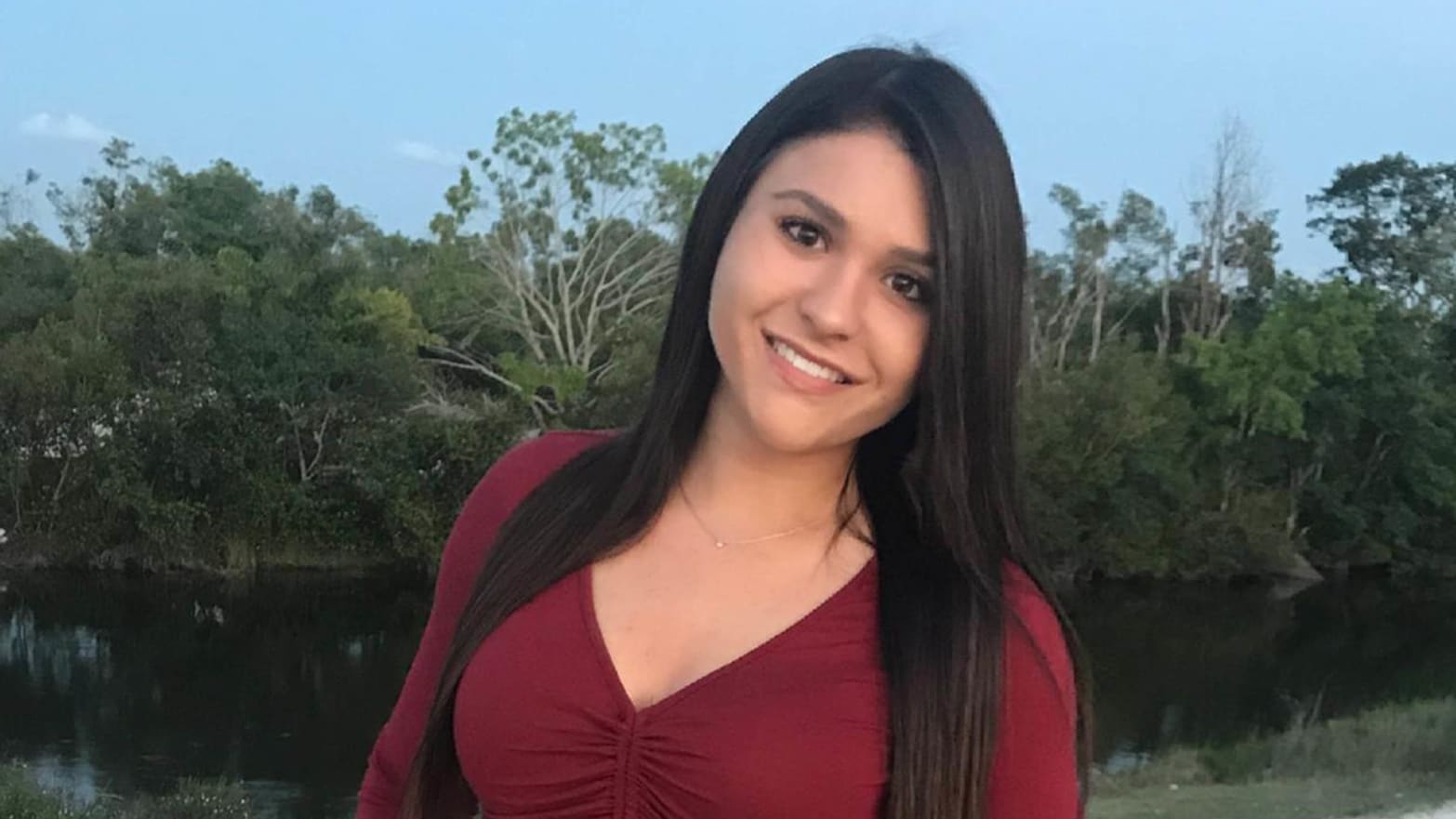
P. S. We all know that negative news makes headlines. If some of the events I have described today sadden you, I apologise. But if tragedy drives us to act, so can positivity. If you need a pick-me-up, be sure to subscribe to my friend Divya Manocha’s weekly positive news newsletter, Happinewss, and be inspired to make the world a kinder, healthier, and more inclusive place. She, too, stays up until unholy hours of the night to bring her writing to those who might need it. I would know, I’ve seen it happen. Besides, don’t we all need that little something on a dreary Monday ;)?
Selected bibliography:
Click to access fair-society-healthy-lives-exec-summary-pdf.pdf
https://academic.oup.com/eurpub/advancearticle/doi/10.1093/eurpub/ckz153/5574387
https://www.who.int/global_health_histories/seminars/presentation46b.pdf?ua=1
 The Study of Empathy
Sobering piece indeed. Well done!
LikeLiked by 1 person
Love this piece! What a wake up call, and the unfortunate part is that I have geard all these news pieces – shows how bad news travels so fast. It is ridiculous. Thanks for yohr rambles, they are grestly appreciated and interesting to read.
LikeLiked by 1 person
Merci beaucoup Miranda! I agree with you, something needs to change.
LikeLike